Waste, sharps, spoiled food
Hoarding cleanup when there are biohazards
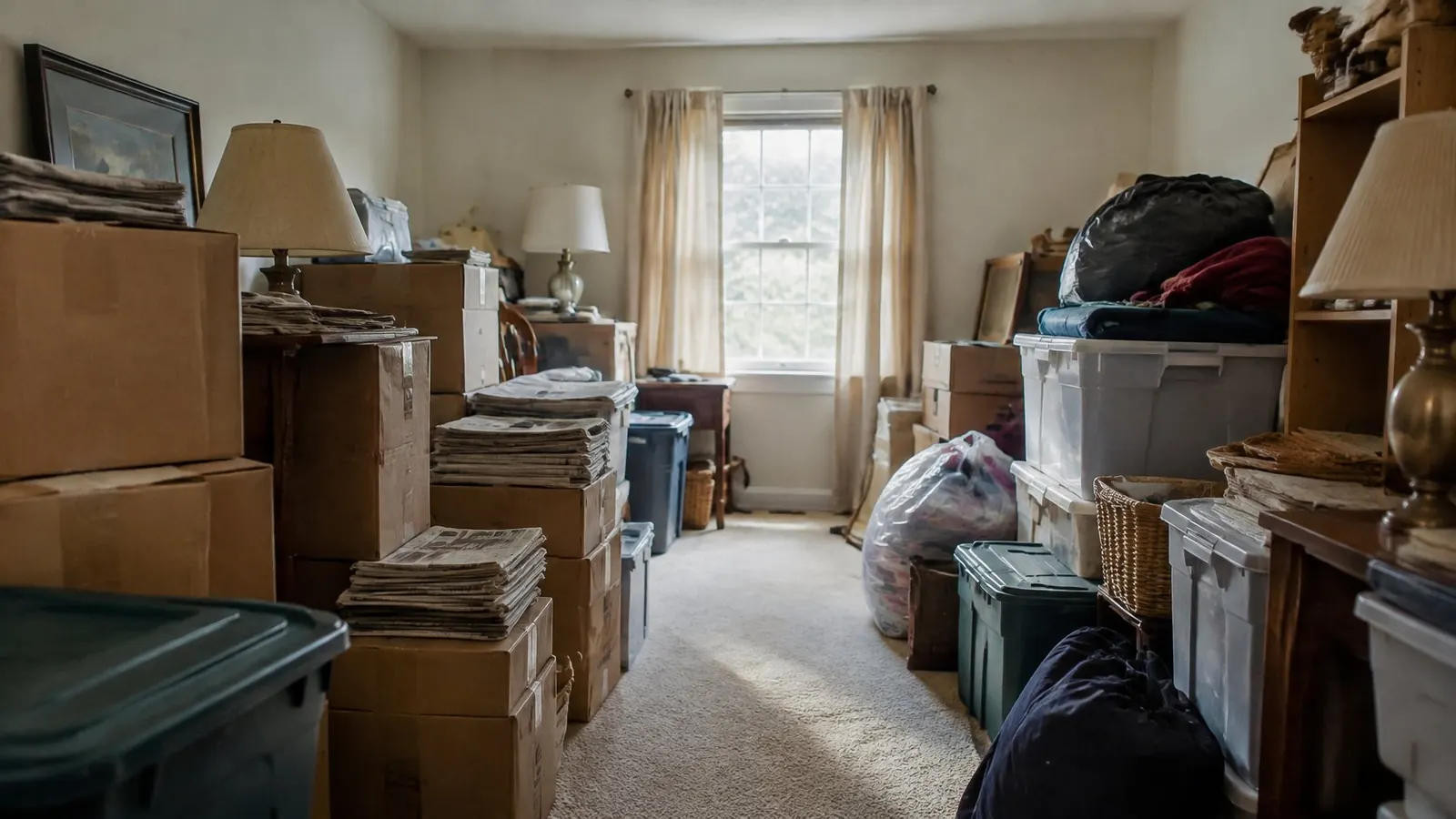
Clutter alone is a moving job. When a hoarded home also holds animal or human waste, used needles, rodent droppings or rotting food, clearing it is a biohazard job, with protective equipment and proper disposal.
Answered 24 hours a day, 7 days a week
Why it matters
What makes it a biohazard
Rodent droppings
Do not sweep or vacuum rodent urine, droppings or nesting material. Spray it with a bleach solution or a registered disinfectant and let it soak first.
Source: CDC
Blood can carry infections
Bloodborne pathogens include hepatitis B, hepatitis C and HIV. Employers whose workers face that exposure must have a written plan to protect them, including protective clothing and equipment.
Source: OSHA
Clean, then disinfect
Cleaning removes dirt and most germs; disinfecting kills most of the rest. Dirt blocks disinfectants, so the order matters.
Source: CDC
The work
How a biohazard hoarding cleanup goes
The company walks through first and agrees with you on what stays, what is searched and what goes. Papers, photographs, cash and keepsakes turn up in most hoarded homes, so ask how it sorts and returns them.
Contaminated items are bagged and disposed of. Floors and surfaces are cleaned and disinfected once they can be reached. Work often goes room by room over several days.
If the person who lives there is still living there, involve them where you can. A calm, respectful pace usually works better than a single sweep.
Other situations
Something else happened?
- Crime scene cleanupAfter a homicide, assault or other violent crime, once police release the scene.
- Unattended death cleanupWhen someone died at home and was not found for some time.
- Suicide cleanupQuiet, careful cleanup so the family does not have to do it.
- Blood and bodily fluid cleanupAfter an injury, a fall or a medical emergency at home or at work.
- Infectious disease cleanupCleaning and disinfecting after an illness, with the right products.
- Vehicle biohazard cleanupBlood or bodily fluids in a car, truck or van.